← All products
PSPLoan servicing

Pulsar Servicing Platform

Modern, config-driven loan servicing for regulated mortgage portfolios.

PSP services mortgage loans on a genuinely modern, config-driven platform. Legacy servicing cores were built around nightly batch cycles, so systems drift out of sync during business hours and every investor-policy change becomes a vendor change request. PSP is built on a rules-engine, event-driven core: investor policy is admin-configurable data, the API and event bus keep systems current in real time, and AI is embedded directly in batch data-quality review.

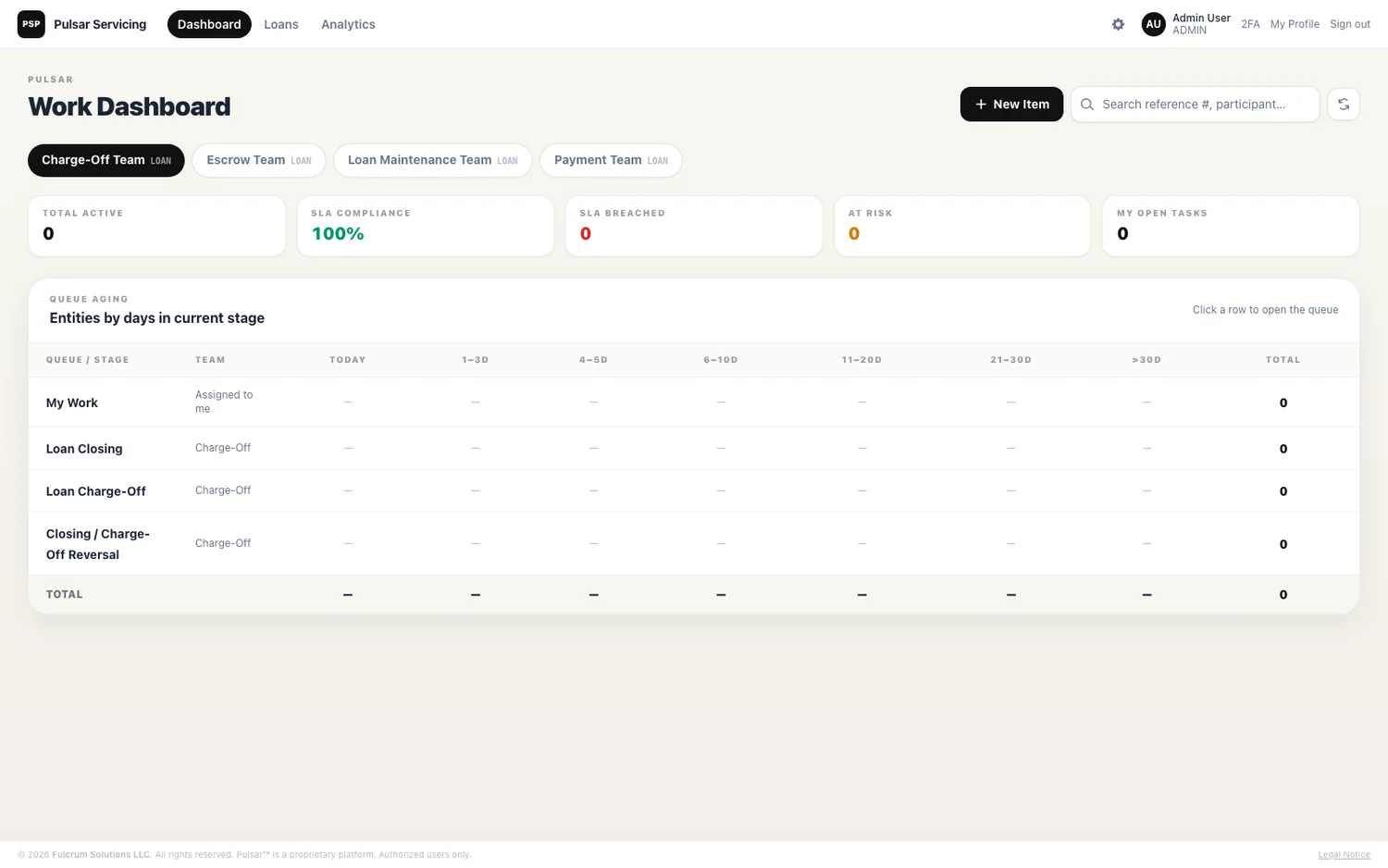
PSP work dashboard
~290REST endpoints, real time
7core modules
2product lines most cores don’t cover: chattel & HELOC

Overview

At a glance

01

No-code investor & program rules

FHA/VA/USDA and escrow/delinquency policy as configurable rule sets — never hardcoded per investor.

02

Real-time API & event architecture

~290 REST endpoints and a live event bus, not an overnight batch-file exchange.

03

AI embedded in operations

Model-agnostic AI wired into batch data-quality review and error triage — not a chatbot on top.

04

Manufactured housing chattel servicing

HPML determination, lot-lease risk and UCC Article 9 repossession.

05

HELOC servicing

Draw and repayment periods, freeze/close and fixed-rate segment conversion, fully modeled.

Capabilities

What makes it different

The platform architecture mainframe-era servicing cores don’t have — plus two product lines most competitors don’t cover well.

01

No-Code Investor & Program Policy Rules

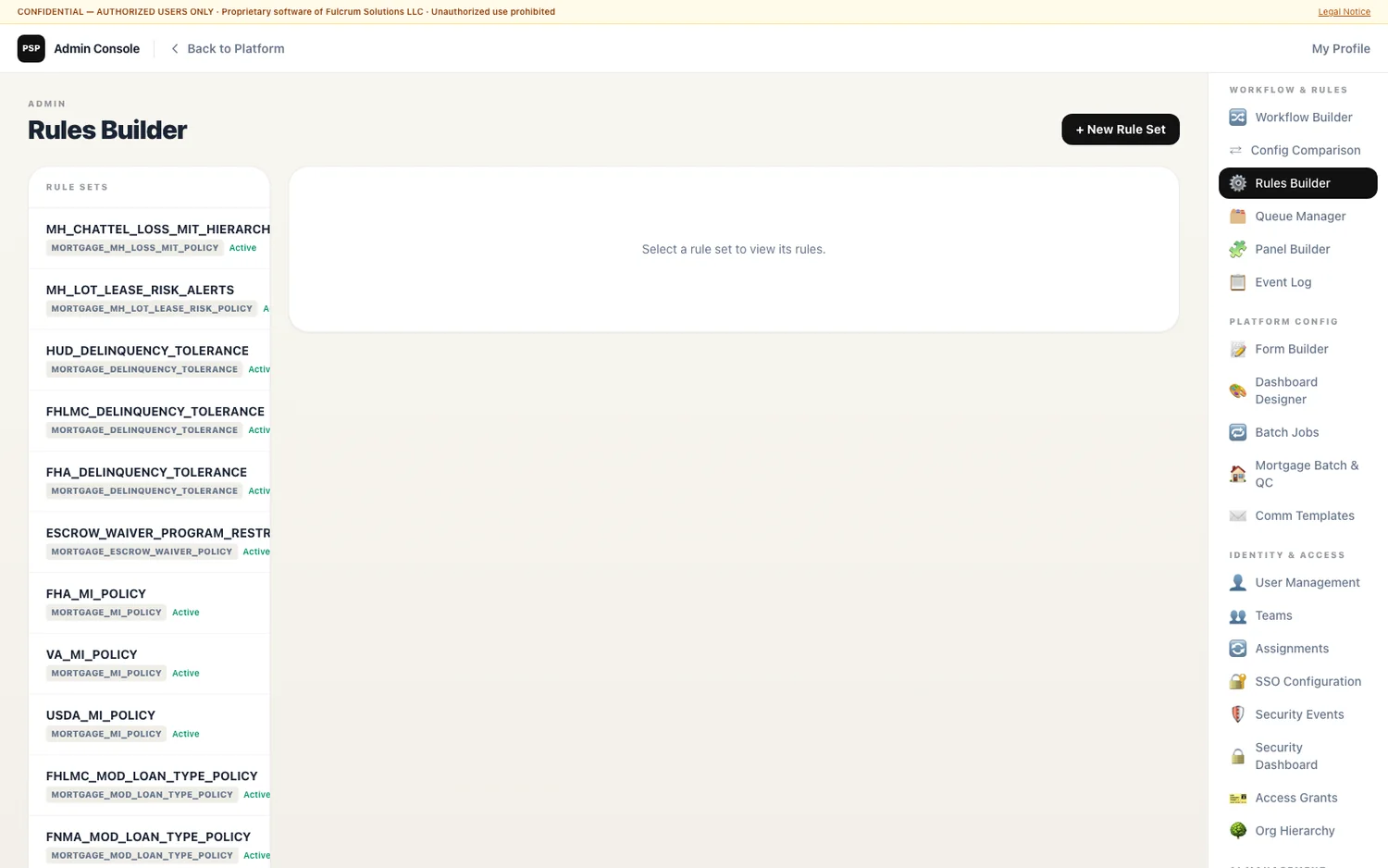
Every investor- and program-specific policy — FHA/VA/USDA mortgage-insurance type, escrow-waiver eligibility, delinquency tolerance — is a rule set an admin configures directly in a Rules Builder, evaluated generically at read time against the loan’s actual data. There is no hardcoded if/else per investor buried in application code, and no vendor change request to update a policy.

Why it matters
  • A new investor program or policy update is a configuration change your own team makes
  • Every policy decision carries its matched rule and reason code for audit
  • One rules-engine mechanism drives every policy area in the platform
No-Code Investor & Program Policy Rules
02

Manufactured Housing Chattel Servicing

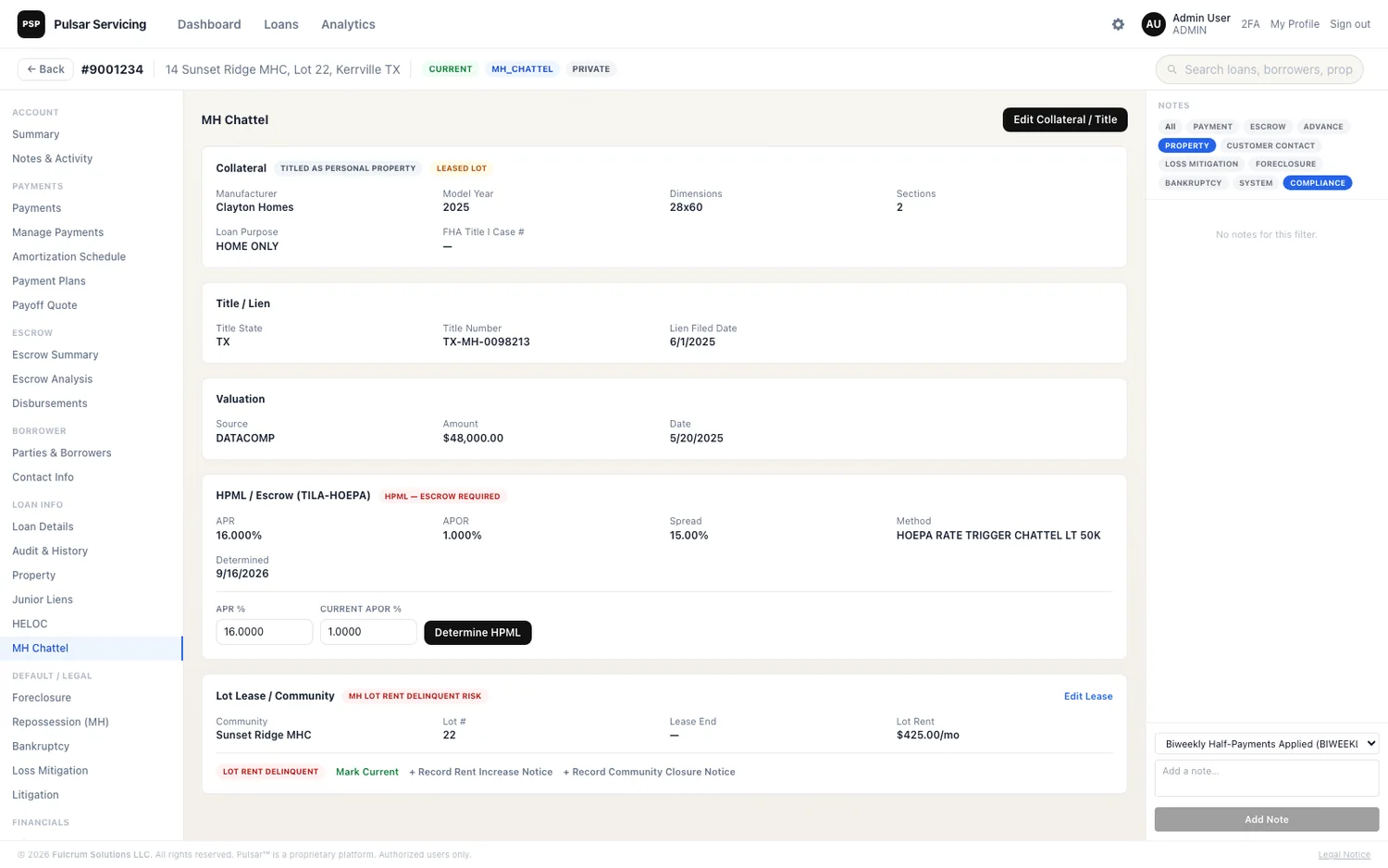
PSP distinguishes manufactured-housing chattel loans — titled as personal property under UCC Article 9, not a mortgage — from real-property loans, and services them accordingly. It computes the TILA/HOEPA HPML determination from the loan’s actual APR/APOR spread, tracks leased-lot community risk, and routes default through a repossession case, not real-property foreclosure.

Why it matters
  • A genuine product gap most general-purpose servicing platforms leave unserved
  • HPML determination and lot-lease risk scanning run automatically in the nightly batch chain
  • Repossession uses legally accurate milestones — right-to-cure, replevin, redemption
Manufactured Housing Chattel Servicing
03

Config-Driven, Dependency-Resolved Batch Chain

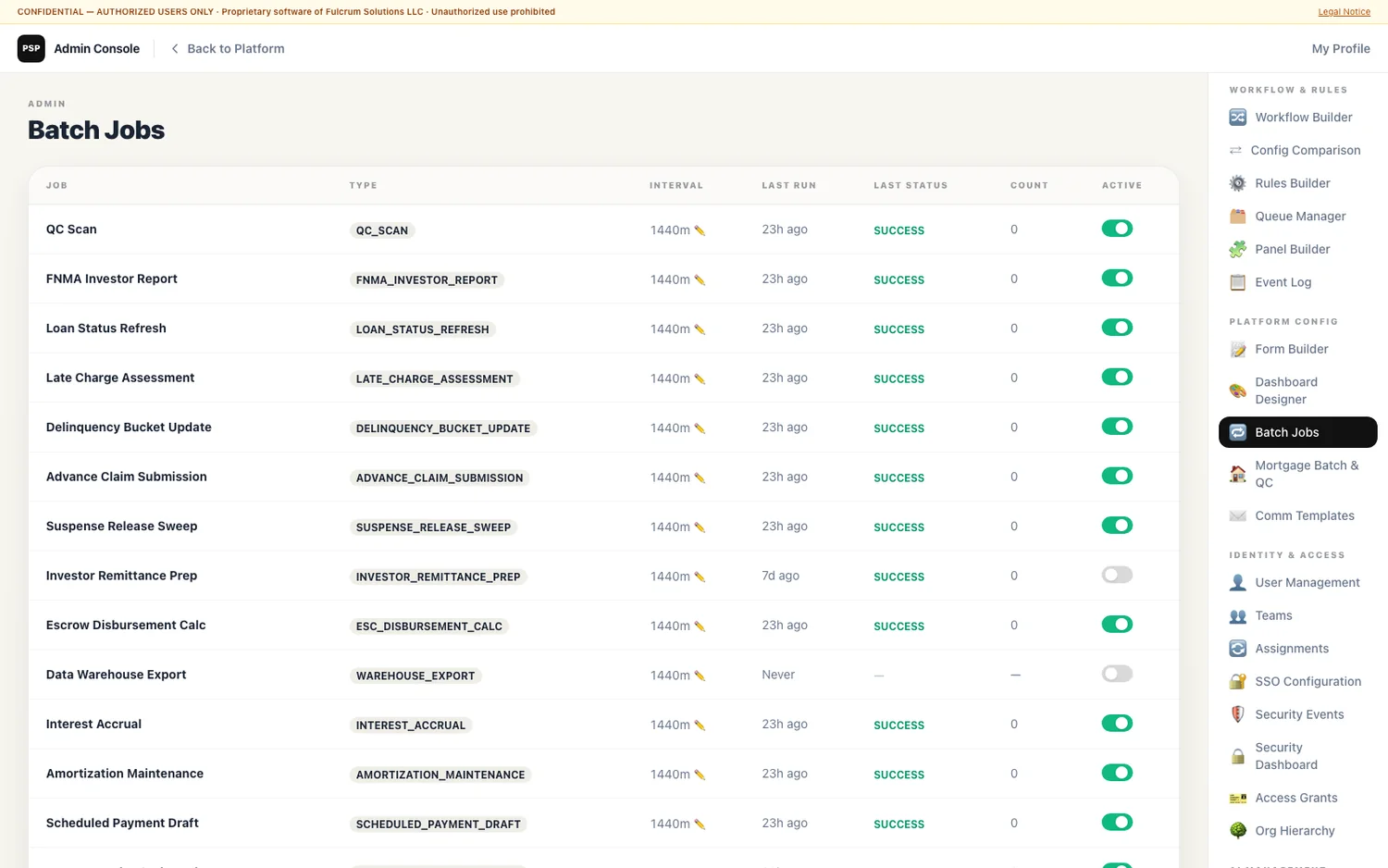
The nightly chain — interest accrual, delinquency updates, escrow analysis, investor remittance, credit reporting and more — is a registry of job types, not a hardcoded script sequence. Dependency resolution runs every job as soon as its dependencies are satisfied, so a retired or renamed job can never deadlock the chain.

Why it matters
  • Adding or changing a nightly process is a configuration entry, not a rewritten script
  • A failed job blocks only its true dependents — the rest of the portfolio keeps processing
  • The dependency graph is data the platform reads, not logic a developer re-derives by hand
Config-Driven, Dependency-Resolved Batch Chain
04

Real-Time API & Event Architecture

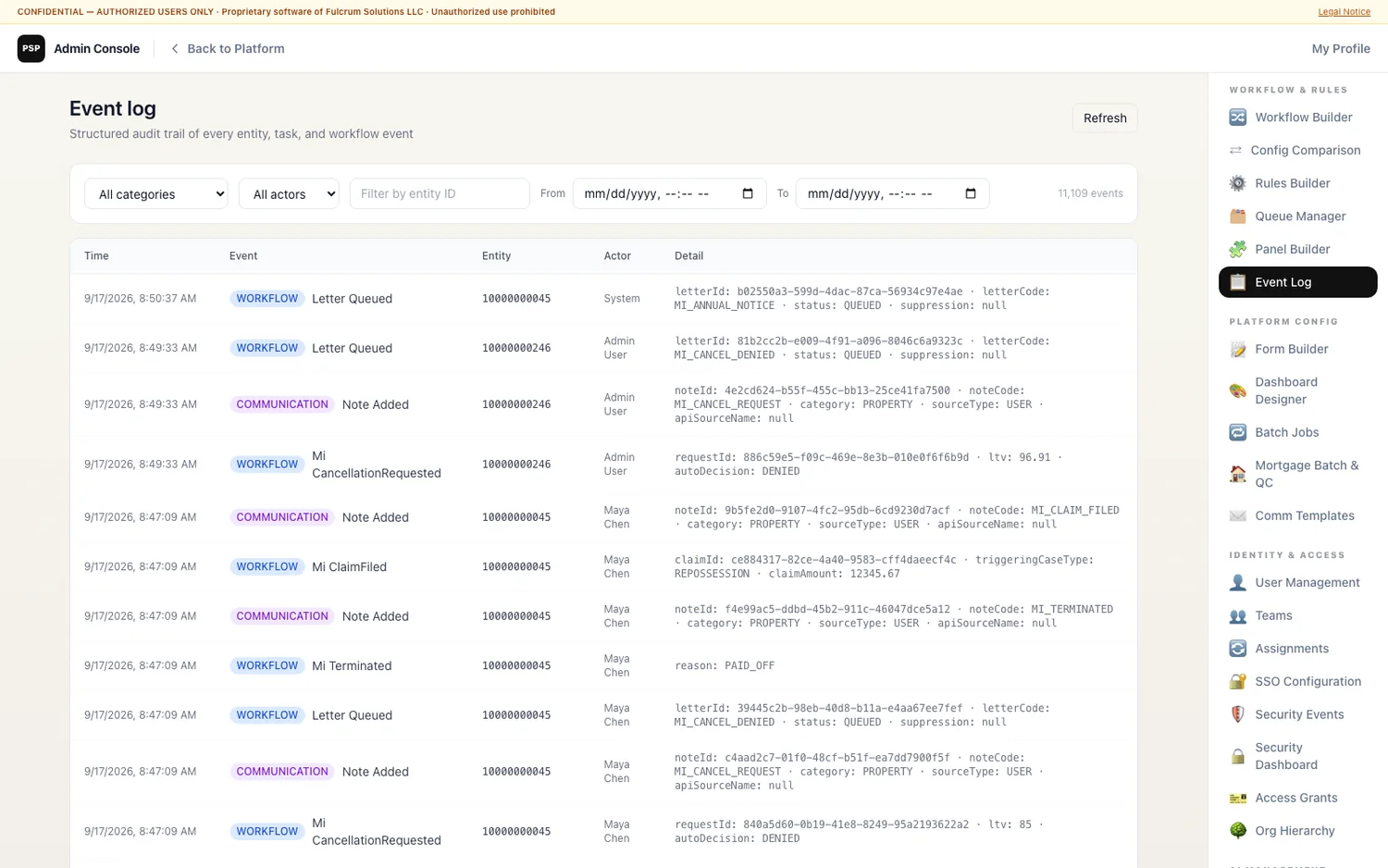
Roughly 290 REST endpoints cover day-to-day servicing in real time, and every meaningful change is written to an append-only event log and emitted live — internal screens and external integrations see the same stream the instant something happens. It’s the architecture a servicing core needs to avoid the overnight-batch sync gap.

Why it matters
  • Internal teams and vendor integrations work from current data, not last night’s extract
  • Every entity, task and workflow event lands in one structured, filterable audit trail
  • A real-time-first foundation, not a batch core with a notification layer added on top
Real-Time API & Event Architecture
05

HELOC Servicing

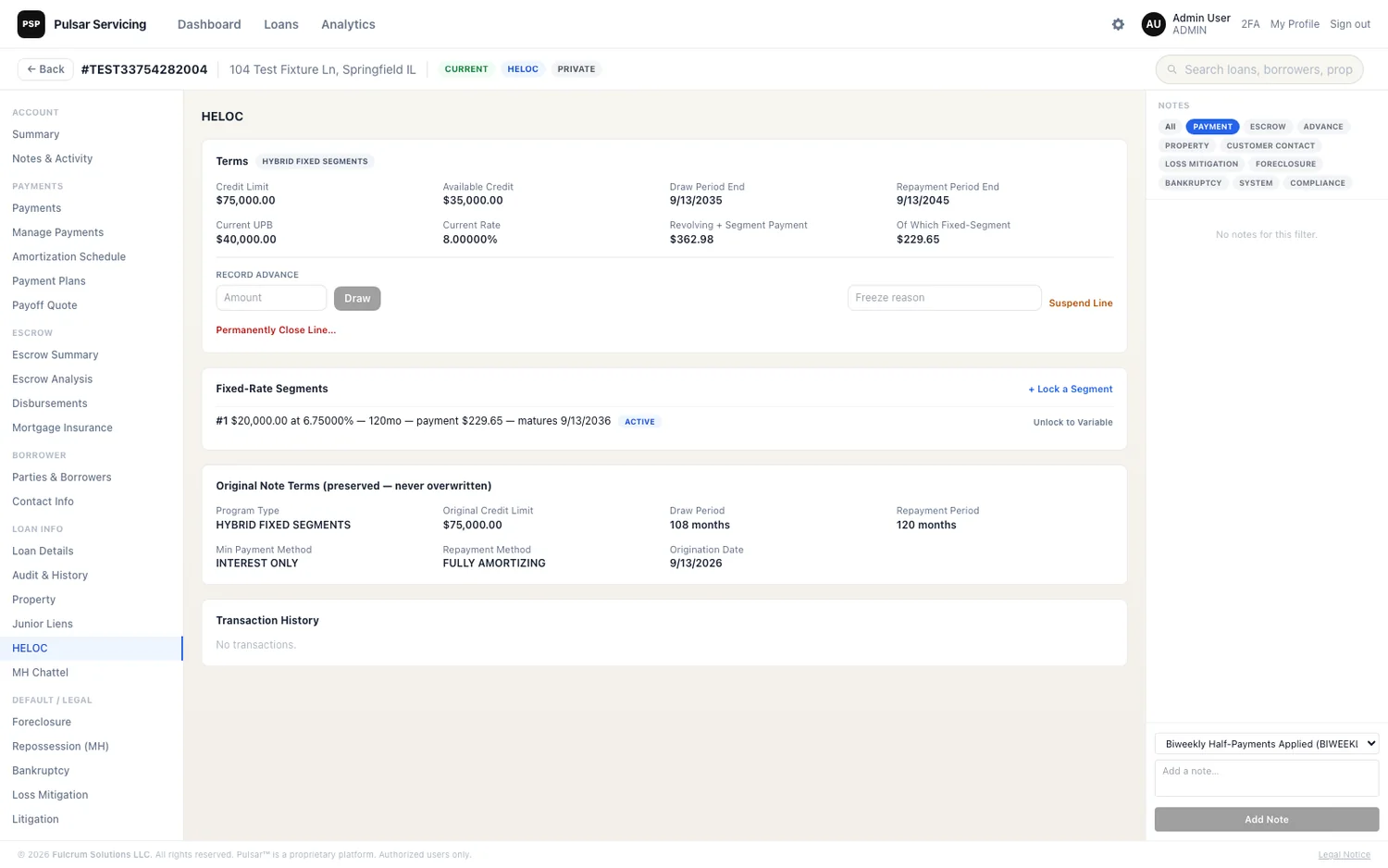
PSP models a home equity line of credit as its own product: draw and repayment periods with distinct minimum-payment logic, freeze and permanent-close actions, and fixed-rate segment locking that converts part of the variable balance to a fixed term without disturbing the underlying line. Original note terms are preserved immutably alongside any later modification.

Why it matters
  • A frequently underserved product line in platforms built around first-lien amortization
  • Fixed-rate segment conversion is modeled as its own transaction type, not approximated
  • Runs on the same servicing shell as every other loan type
HELOC Servicing
06

No-Code Panel & Report Builder

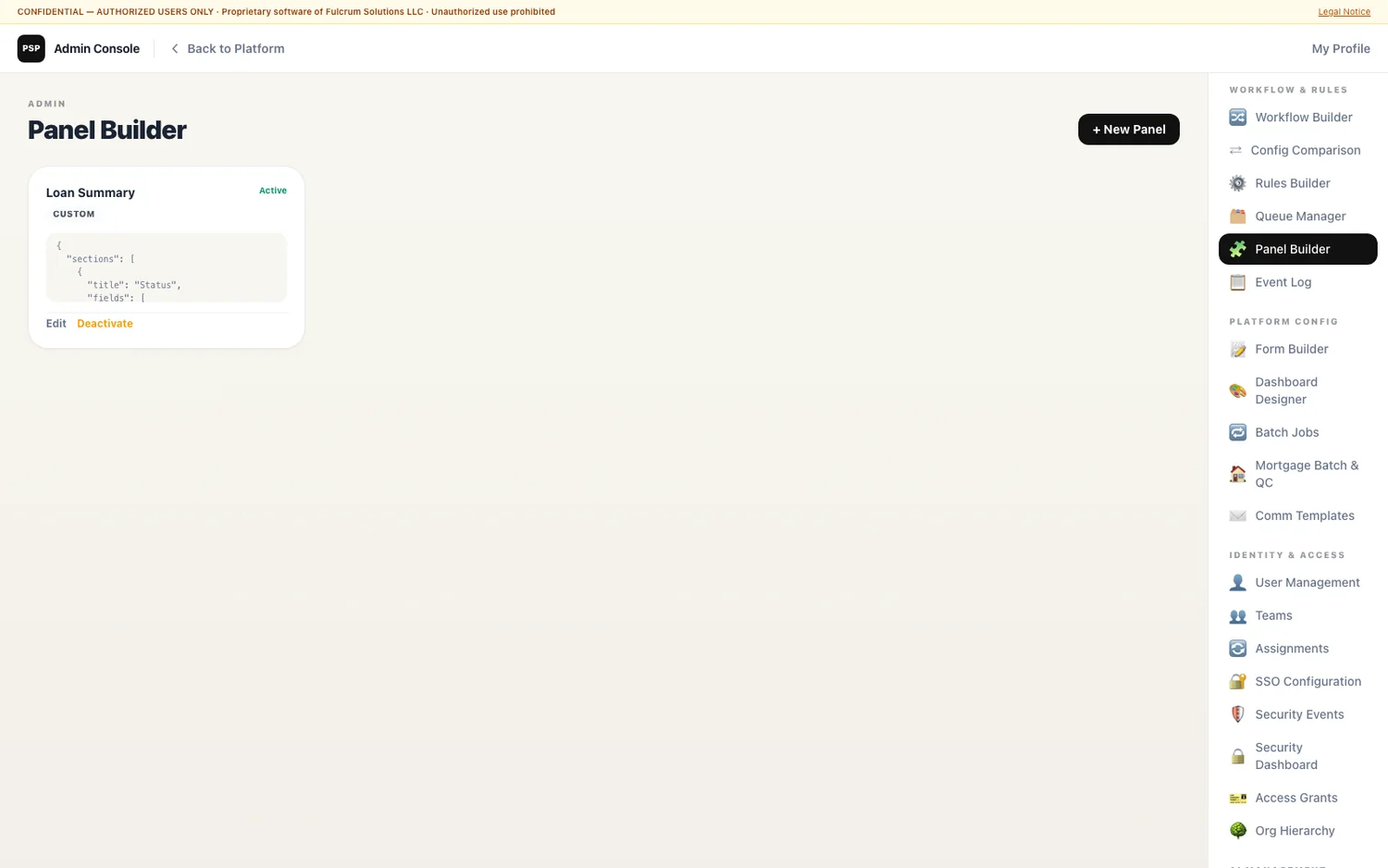
Data-entry panels and reports are admin-configured, not custom-coded per screen. Panel Builder defines the fields and layout a servicing screen shows; Report Builder and Dashboard Designer let a team compose and publish new reports and dashboards directly against live data, with no frontend deployment.

Why it matters
  • A new data-entry screen or report is configuration work your implementation team owns
  • Panels and reports share the same admin surface as every other configuration area
  • New reporting needs don’t wait for the next release cycle
No-Code Panel & Report Builder
07

AI Embedded in Servicing Operations

AI is routed through a single model-agnostic dispatch layer — any preconfigured cloud or on-premises model, chosen per use case — and wired into real operational work. Automated data-quality review flags anomalies in batch output, and error triage drafts a human-readable diagnosis for a failed job before an operator ever opens a log file. Every agent’s model and prompt are configured per organization.

Why it matters
  • AI reviews the platform’s own batch output for data-quality problems automatically
  • A failed batch job arrives with a plain-language triage hint already attached
  • Swapping the underlying model is a configuration change, satisfying data-residency requirements

Built in

Also built into the platform

PSP ships the operational servicing infrastructure every deployment needs on day one.

Foreclosure & Bankruptcy Tracking

Status and milestones — the case itself runs in an external system.

Payment Plans & Modifications

Trial plans, repayment plans, modification application, forbearance posting.

Escrow Administration

Setup, analysis, disbursements, vendor tax and insurance ingestion.

Investor Reporting & Remittance

Custodial accounts, GL entries, trial balances, remittance runs.

Servicer Advance Ledger

Advance codes, recovery tracking, investor claim filing.

Credit Reporting & Disputes

Bureau reporting, suppression and dispute handling.

Construction Loan Servicing

Draw schedules and recast handling for construction-to-permanent loans.

Mortgage Insurance Administration

HPA-compliant PMI/MIP cancellation, disclosure and claims tracking.

Who it’s for

Who it’s for

Servicers under the same investor-compliance pressure as the largest banks, without the budget for a bespoke servicing build.

Mid-market bank servicers250K–1M loan portfolios needing investor-rule flexibility without a full core-system replacement.
Non-bank & independent servicersThe fastest-growing segment of servicing, priced out of legacy implementation cycles.
Manufactured housing & HELOC lendersTwo product lines many general-purpose servicing platforms don’t cover well.
Servicing-rights investors & subservicersMulti-investor portfolios needing per-investor policy configuration, not one-size-fits-all logic.

Architecture

Under the hood

How PSP is built

Rules-engine and event-driven by design — investor policy, panels, reports and batch jobs are all configuration the platform reads, not code a developer has to change.

01PresentationServicing console & admin surface
Servicing ConsoleWork dashboard, loan search, loan-detail shell
Admin ConsoleRules, Panel and Report Builders, Dashboard Designer, Batch Jobs
Borrower PortalToken-based, passwordless dashboard and document center
02API & EventReal-time, not overnight
REST API~290 endpoints across servicing and admin config
Event BusAppend-only event log, live emission to any listener
Batch Chain RunnerJob-type registry with dependency resolution
03Investor & Program PolicyNo-code, data-driven
MI & Escrow PolicyFHA/VA/USDA insurance type, escrow-waiver eligibility
Delinquency TolerancePer-investor de-minimis shortfall thresholds
MH Chattel PolicyHPML/HOEPA determination, lot-lease risk, loss-mit hierarchy
AI Ops ReviewModel-agnostic AI in batch data-quality review and error triage
04Data & AuditDurable and migration-disciplined
PostgreSQLLoans, parties, escrow, HELOC, chattel terms
Job QueueNightly batch chain and scheduling
Audit & Event LogField history and rule-match trail
05IntegrationOwned by external systems where it should be
Foreclosure / BK StatusStatus and milestones only
Rate Reference DataARM indices and APOR through one mechanism
Investor RoutingMulti-investor pool accounting

Talk to us about Pulsar Servicing Platform.

Get in touch